Today I would like to present you my typography research about typeface's rules and history. I've done it on word doc but I've transfered it onto pdf file. I hope You'll enjoy it ;)
I also found out something interesting in one of graphic design's books.
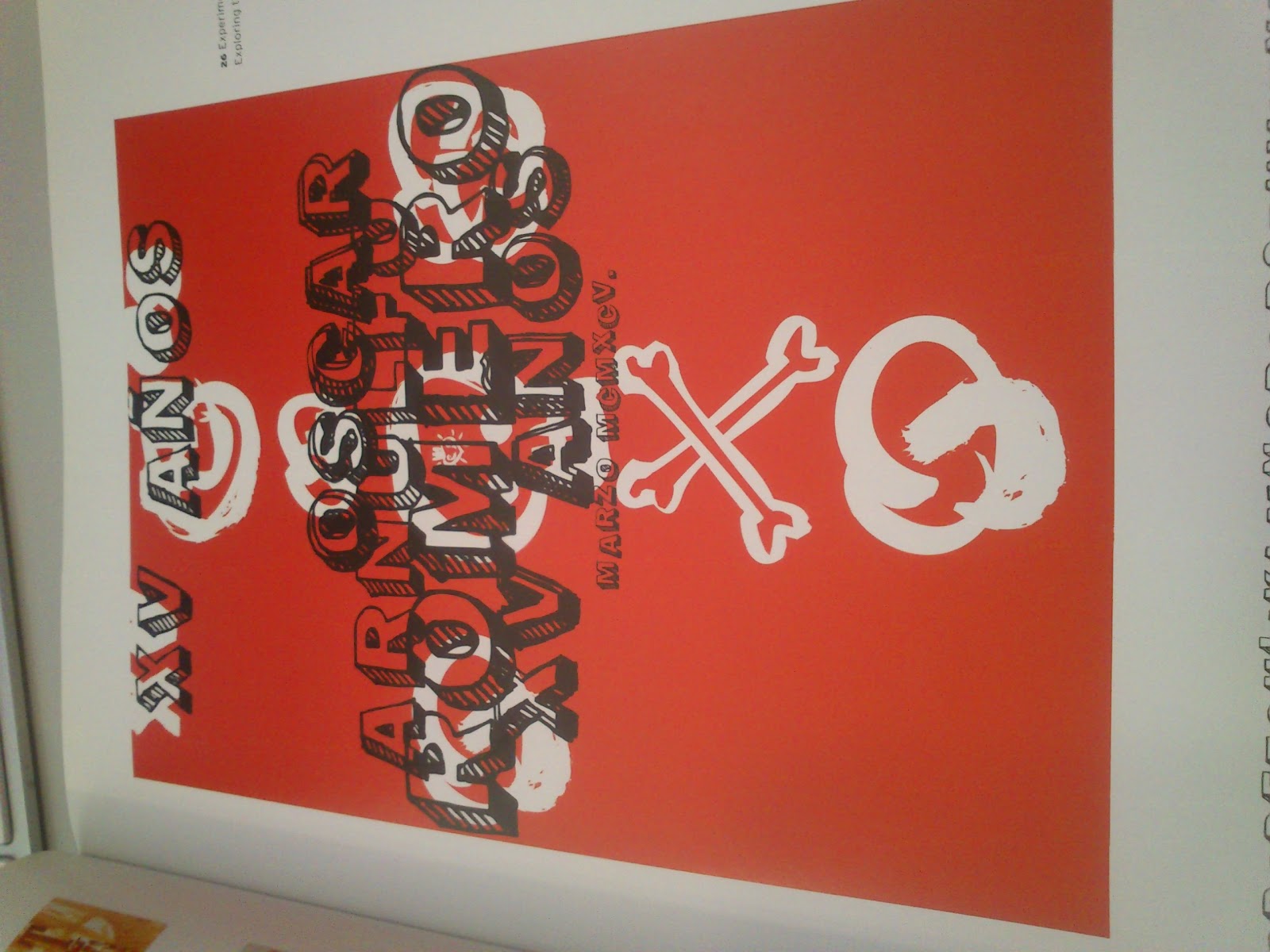
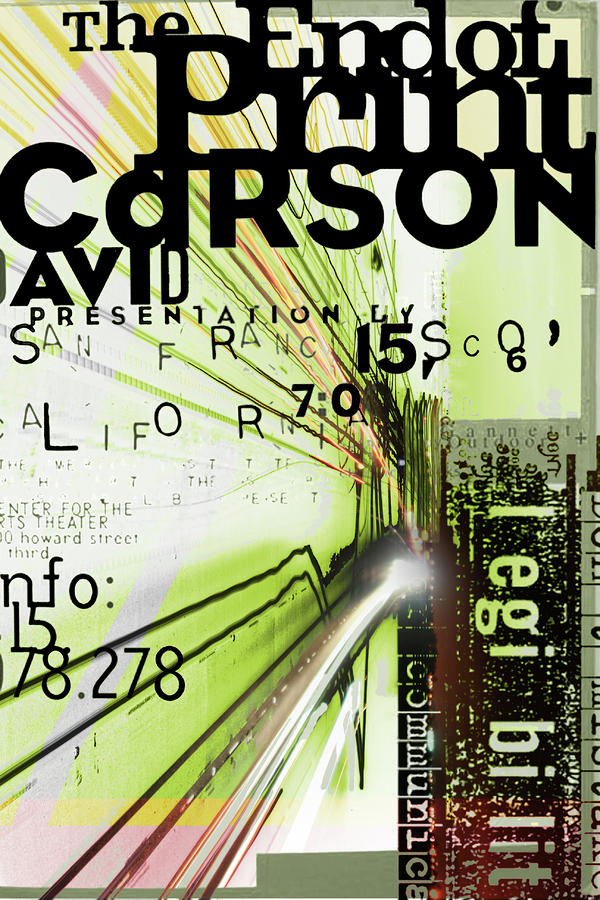
Here are few images representing typeface poster. This might be an example and idea for my Typography Poster for this project:)
To be honest with you I like of these posters. They are funky and original. I like the colours, the fonts and the idea behind them as well. But well, everyone has their favourite one, mine is the last one with purple circles and text inside. The layout is interesting as well. Shows Many letter forms and different type of colours I may use and get an example of in my typography poster designs;)
P.S- I found the images in some random magazine book's. I didn't even expect theres is something there about the brief Im doing at the moment.
To be continued......
19/03/2013
hi everyone
i know i should not post things like this blog, but because i am truelly polish girl i have to say that polish team playing so good today and i hope we gonna keep it up and win today's match:D
Today I want to show you my research that I have done for my "Typography" project I'm doing right now at the college. Typography is not the best area I'm specialize for, but I've learned a lot of practical research about D.Carson who is Graphic Designer specializing in Typography and his career history. To be honest with you guys I'm not his fan at all, but I'm trying to understand his perspective for his designs and imagination, and what I have notice is that he always puts his own name on his posters every time is possible. To me its a bit too much, of course everyone knows his name but I don't really know what is the real story behind his typography name. I've read that his career history is so long and when I'm reading his interviews I see his passion inside his mind and I feel like he was born to become famous Graphic Designer since the beginning. Here I've found of the web some useful information about him, his career and him-self (including pictures of his works.)
Interestingly enough, Davis Carson, born in 1955 in Texas, did not go to school to become a graphic designer. His degree is in sociology from San Diego Sate University; far from the realm of art. In the 1970s, Carson worked as a sociology teacher at a California high school. He also dabbled in professional surfing, ranking 9th in the world. His formal training in graphic design came from brief 2 to 3 week classes he took at the University of Arizona and in Switzerland in the 1980s. This is when he discovered his talent.
Throughout the 1980s and 90s, Carson was a major influential force behind skateboarding and surfing magazines and campaigns. Such magazines included Beach Culture, Transworld Skateboarding, and Self and Musician. The work he did at these venues brought him notice and further opportunities for his innovative grunge style and typographic oddities to flourish. Publisher Marvin Scott Jarrett was impressed with Carson’s work and hired him to design a music and lifestyle oriented magazine called Ray Gun. His work in Ray Gun magazine brought him even more fame and reputation. So when he started his own design firm, David Carson Design, in 1995, he soon had accounts with major companies including Ray Ban, Microsoft, and Pepsi.
Carson says he is most interested in the emotion of design. There is an emotional response to the design piece that the viewer experiences before they even read the text or figure out what is trying to be sold or promoted. He went on to publish a number of books detailing his work including “The End of Print: The Graphic Deisgn of David Carson,” “2nd Sight,” and “Fotografiks: An Equilibrium Between Photography and Design Through Graphic Expression That Evolves from Content.”
Carson travels frequently, giving speeches and seminars about his work and graphic design as a whole. One such speech, “David Carson on Design + Discovery,” was recorded and posted on www.ted.com, where he talks about the importance of intuitive design. Carson expresses how schools are shying away from teaching design through intuition because it is difficult to “quantify” intuition. In this video he elaborates about the importance of intuition by examining a quote by Albert Einstein: “The intellect has little to do on the road to discovery.
As part of my advertising project I had to research about shocking and controversial UK's adverts. When I went through the web looking for interesting adverts I have read some opinions about UK advertising industry and to be honest with you, I've realized that advertisers making controversial adverts just because they want people to remember it and sometimes to buy the products, but sometimes the ads are just over control and they're too shocking to watch it or show it on public eyes and billboards.
Here are adverts that shocked the whole world so far. For the start :
At first, the images are shocking. President Obama planting a kiss on Chinese President Hu Jintao’s lips. German Chancellor Angela Merkel smooches French President Nicolas Sarkozy, her nation’s economic rival.
Other world figures include Pope Benedict XVI and Dr. Ahmed al Tayyeb, the grand sheikh of Cairo's Al Azhar Mosque. This image was pulled from the campaign after a complaint by the Vatican.
Palestinian President Mahmoud Abbas and Israeli Prime Minister Benjamin Netanyahu.
President Obama and Venezuelan President Hugo Chavez.
North Korean leader Kim Jong Il and South Korean President Lee Myung Bak
German Chancellor Angela Merkel and French President Nicolas Sarkozy
These images aren’t the latest political scandal. They’re a new ad campaign from Italian clothing company United Colors of Benetton called “Unhate.”
The images are digitally manipulated but they send a pointed message. The newly unveiled UNHATE Foundation seeks to promote a culture of tolerance and combat hatred around the world, the company said in a news release. The ads have already become a source of controversy. After the images went up, the Vatican quickly denounced an image of Pope Benedict XVI kissing Egyptian Imam Ahmed el Tayyeb on the lips.
Vatican spokesman the Rev. Federico Lombardi called the digitally altered image an “unacceptable” and offensive manipulation of the pope’s likeness, according to the Associated Press.
Benetton removed the image shortly thereafter and it is no longer on the website. The company is known for its striking, and often controversial, ads. Past ads have shown a priest kissing a nun, a white baby breast-feeding from a black woman and three human hearts with the words “white,” “black” and “yellow” printed over them.
2006 Nike Campaign
Rooney fractured the base of his 4th metatarsal before the 2006 World Cup finals, but he made a full recovery in time to play at the World Cup. Therefore, some notable British journalists claimed that Nike cynically portrayed Rooney part Woden, the Anglo-Saxon god of war, part the suffering but triumphant Christ. According to them,
Racial: United Colors of Benetton – Angel and Demon
The Italian master of shockvertising created in 1991 unprecedented controversy with the “Angel and Devil” campaign. The ad portrays a moral conflict, symbolized by an angel a white girl with blonde curly hair, blue eyes and the devil an Afro American girl whose hair looks similar to devilish horns. The gap in the middle of the front teeth is a sign of wisdom, beauty, happiness and fertility in many parts of the world. It is called les dents du bonheur, teeth of happiness. This makes the white girl look even more innocent and angelic
United Colors Of Benetton
Loved to push the envelope, but mostly there was a message behind it. This one depicts three identical looking hearts but all with a colour written on them, White, Black and Yellow. It’s funny how we need an advertisement for clothes to teach us about racial intolerance.
Political: Corporate Chhattisgarh – Martyr
Ogilvy’s advertising campaign was sponsored by Corporate Chhattisgarh, a monthly corporate magazine. The shocking ad questions the faith-based terrorism and the role played by religion in rewarding and justifying it.
Religion: British Humanist Association
Telling believers that there is no god is like telling children there is no Father Christmas. There is no need to be malicious, just let them live in ignorant bliss. No. You got to have messages on buses saying, “There is probably no god”, to rub salt into the wound. Now how they gonna get to heaven? Still, you did say “probably”
As you can notice today's blog post is going to be about my fashion advertising assignment. I just want to say that this was one of the hardest projects I did so far in my college career. It took me a lot of days and nights to produce some good pieces of work. I thought I could show you examples of the make-up photo-shoot I did with one of my fame models. All together I did 3 photo-shoots about Men's suits, shoot about Make-up and beauty and jewellery. One of my modeling criteria was not to choose super skinny models, because I don't want to promote models size 0 but the natural shape beauties!
Today I'm posting research about guerrilla adverts, to be honest with you I did not know what's Guerrilla advertising before I found out researching about it. In my research you will find out F.E. the definition of Guerrilla advertising, examples of them and many more. Here it go:
Lets start from what really i "Guerrilla Marketing" is:
Its an advertising strategy that focuses on low-cost unconventional marketing tactics that yield maximum results.
\
"For the homeless, every day is a struggle.
Donate today and help us feed the homeless"
The original term was coined by Jay Conrad Levinson in his 1984 book ‘Guerrilla Advertising’. The term guerrilla marketing was inspired by guerrilla warfare which is a form of irregular warfare and relates to the small tactic strategies used by armed civilians. Many of these tactics includes ambushes, sabotage, raids and elements of surprise. Much like guerrilla warfare, guerrilla marketing uses the same sort of tactics in the marketing industry.
This alternative advertising style relies heavily on unconventional marketing strategy, high energy and imagination.Guerrilla Marketing is about taking the consumer by surprise, make an indelible impression and create copious amounts of social buzz. Guerrilla marketing is said to make a far more valuable impression with consumers in comparison to more traditional forms of advertising and marketing. This is due to the fact that most guerrilla marketing campaigns aim to strike the consumer at a more personal and memorable level.
To make people realize that saving the planet starts with them saving paper, we took a standard paper dispenser and made a simple modification with green foil and the silhouette of South America. This allowed us to prove that the survival of the forest is directly connected to what people consume.
Guerrilla marketing is often ideal for small businesses that need to reach a large audience without breaking the bank. It also is used by big companies in grassroots campaigns to compliment on-going mass media campaigns. Individuals have also adopted this marketing style as a way to find a job or more work.
When it all happened?
Advertising can be dated back to 4000 BC where the early Egyptians used papyrus to make sales messages and wall posters. What we consider traditional advertising and marketing slowly developed over the centuries but never really boomed until the early 1900s.
It was at this time that the main goal of advertisements were to educate the consumer on the product or service rather than to entertain and engage them.
In 1960, campaigns focuses on heavy advertising spending in different mass media channels such as radio and print.
It wasn’t till the late 1980s and early 1990s that cable television started seeing advertising messages. The most memorable pioneer during this time was MTV where they focused on getting the consumer to tune in for the advertising message rather than it being the by-product of a featured show.
Agencies struggled to make an impression on consumers and consumers were tired of being marketed to. It was time for a change.In 1984, marketer Jay Conrad Levinson introduced the formal term in his book called, “Guerrilla Marketing.”
Levinson comes from a background as the Senior Vice-President at J. Walter Thompson and Creative Director and Board Member at Leo Burnett Advertising. In Levinson’s book, he proposes unique ways of approaching and combating traditional forms of advertising. The goal of guerrilla marketing was to use unconventional tactics to advertise on a small budget. During this time, radio, television and print were on the rise, but consumers were growing tired. Levinson suggests that campaigns need to be shocking, unique, outrageous and clever. It needs to create buzz
Guerrilla marketing originally was a concept aimed towards small businesses with a small budget, but this didn’t stop big businesses from adopting the same ideology.
Larger companies have been using unconventional marketing to compliment their advertising campaigns. Some marketers argue that when big businesses utilize guerrilla marketing tactics, it isn’t true guerrilla. Bigger companies have much larger budgets and their brands are usually already well established.
It can also be far more risky for a big business to do guerrilla marketing tactics. In some instances, their guerrilla stunts can flop and ultimately become a PR nightmare. Smaller businesses don’t run as much risk as most people will just write it off as another failed stunt.
One such example would be the famous 2007 Boston Bomb Scare caused by Turner Broadcasting on January 31, 2007. What started off as a guerrilla marketing campaign to promote a new film featuring a Cartoon Network show called Aqua Teen Hunger Force, turned into a citywide bomb scare. Turner Broadcasting with the help of guerrilla marketing agency, Interference, Inc., placed battery-powered LED placards resembling the ‘Mooninite’ character on the cartoon show. The LED placards were placed throughout Boston, Massachusetts and the surrounding cities.
The placards were placed in random locations and remained unlit during the day. At night the placards lit up to show the ‘Mooninite’ character putting up his middle finger. The devices resembled some characteristics of explosive devices and soon caused the scare.
The campaign ended up costing Turner Broadcasting and Interference, Inc. $2 million for the incident. The campaign itself received a lot of criticism both good and bad.
Well it seems that many companies have learned from past successes and failures. One major brand that has been doing a wonderful job is Coca-Cola.
In January 2010, The Coca-Cola Company created the “Happiness Machine” video with the help of interactive marketing agency, Definition 6. The video featured a Coca-Cola vending machine that dispensed a lot more than just a cold beverage. The film was shop at St. John’s University in Queens, New York, using 5 strategically placed hidden cameras. The reactions from the students were completely unscripted.
The video went viral and now has over 4.5 million views on YouTube. In May 2010, it won a prestigious CLIOGold Interactive Award. The film had the highest penetration in Brazil, Mexico, Japan and Russia. After seeing the amazing ROI on this video, Coca-Cola decided to continue the ‘Happiness’ theme by releasing several other videos using the same concept.
And by the way I found funny "The Simpsons"Coca-Cola commercial on Youtube called "Hard Times'
Back to subject
On October 14th, 2012, Red Bull and Austrian extreme athlete Felix Baumgartner set a world record for the highest skydiving jump. The Red Bull Stratos was a campaign to send Baumgartner on a death defying jump at over 128,100 feet into the stratosphere. Baumgartner broke the speed of sound reaching an estimated speed of 833.9 mph (1,342.8 km/h) after jum[ing out of a helium-filled balloon. The entire trip back to earth lasted 9:09 minutes with 4:22 of that time in free-fall.
More importantly, Red Bull attracted much deserved attention for this grand stunt. On this day, they also broke social media records when they reached over 8 million confirmed concurrent views on YouTube. The team achieved this with several grand efforts on their social media team. By visiting the Red Bull Stratos website, users could tune in to the jump LIVE, stay engaged via the twitter stream and a connect with others on Facebook.
Guerrilla marketing may be the right solution for your small business. Why? When executed well, it will often be low cost yet reach a highly targeted audience. It can also be a great way to get noticed, distinguish from the competition and earn a reputation for being fun and different.
In an interview with Entrepreneur magazine, several guerrilla marketing agency experts divulged that good guerrilla marketing is…
“…unauthorized and disruptive” and “sticky.” - Brett Zaccardi of Street Attack
“…brand activation that isn’t 100 percent permitted by the city, event or establishment.” - Adam Salacuse, Founder and President of ALT TERRAIN
Advertising Agency: Lg2, Quebec, Canada
Advertising Agency: DDB China Group Shanghai, China
"Thank you for caring, we hope there are more people like you. Be a mom for a moment"
Advertising Agency: Taivas, Helsinki, Finland
Advertising Agency: Saatchi & Saatchi New Zealand
A also found out some of Guerrilla advertising agencies. And to be honest with you, I'm actually quit surprised because I saw some of them on the web and TV before I've researched them, and I didn't realise they're so popular throughout the World.
HotCow
Founded in the city of London on January 2006, Hotcow marketing agency will prepare an unconventional marketing plan “you cannot resist” and implement it flawlessly. These guys will help create, plan and implement all sorts of unconventional marketing campaigns we can think of. Another important point for Hotcow is that they clearly link marketing outdoor actions to mobile marketing, viral and social media creating a brand ecosystem that gets added customer exposure and brand value.
Alt Terrin
Alt Terrain is a highly specialized guerrilla marketing execution partner to communication agencies covering most of the United States of America. They present themselves as a true agency partner as they work really hard on creating non-traditional media and marketing resource exclusively dedicated to the needs of advertising, event, media and PR agencies. Alt Terrain is a great fit for collaborative work between agencies for complex guerrilla marketing campaigns in the U.S.
Torke
Torke is another great expositor of guerrilla, ambient and brand experience communication agency in Europe. Innovative from its founding in 2005, Torke has entitled itself as “the 1st guerrilla marketing agency in Portugal”. Awarded with Best agency of the year at Clube Criativos de Portugal, Torke presents to its clients ground breaking ideas and superb execution of creative guerrilla marketing communication campaigns in the streets. Torke marketing agency holds a valuable network of partners (including Alt Terrain, Billy the Group, Jack Liberties, Tribeca and Sponge) and it is present in Lisboa, Istanbul and Sao Paulo. Torke represents a great alternative for brands in Europe looking for some “different” thinking and street stage masters
The Michael Alan Group
This New York firm is a non-traditional marketing and event production company with an impressive count of over 2.000 marketing events per year. Their challenge is to capture the attention, imagination and brand allegiance of even the most ad-saturated customers. The Michael Alan Group (MAG) develops experiential connections through the “staging” of direct, guerrilla and buzz-worthy marketing productions in the U.S
Because I'm always forgetting all of the advertising websites I did little list of blogs and websites of advertising agencies.